
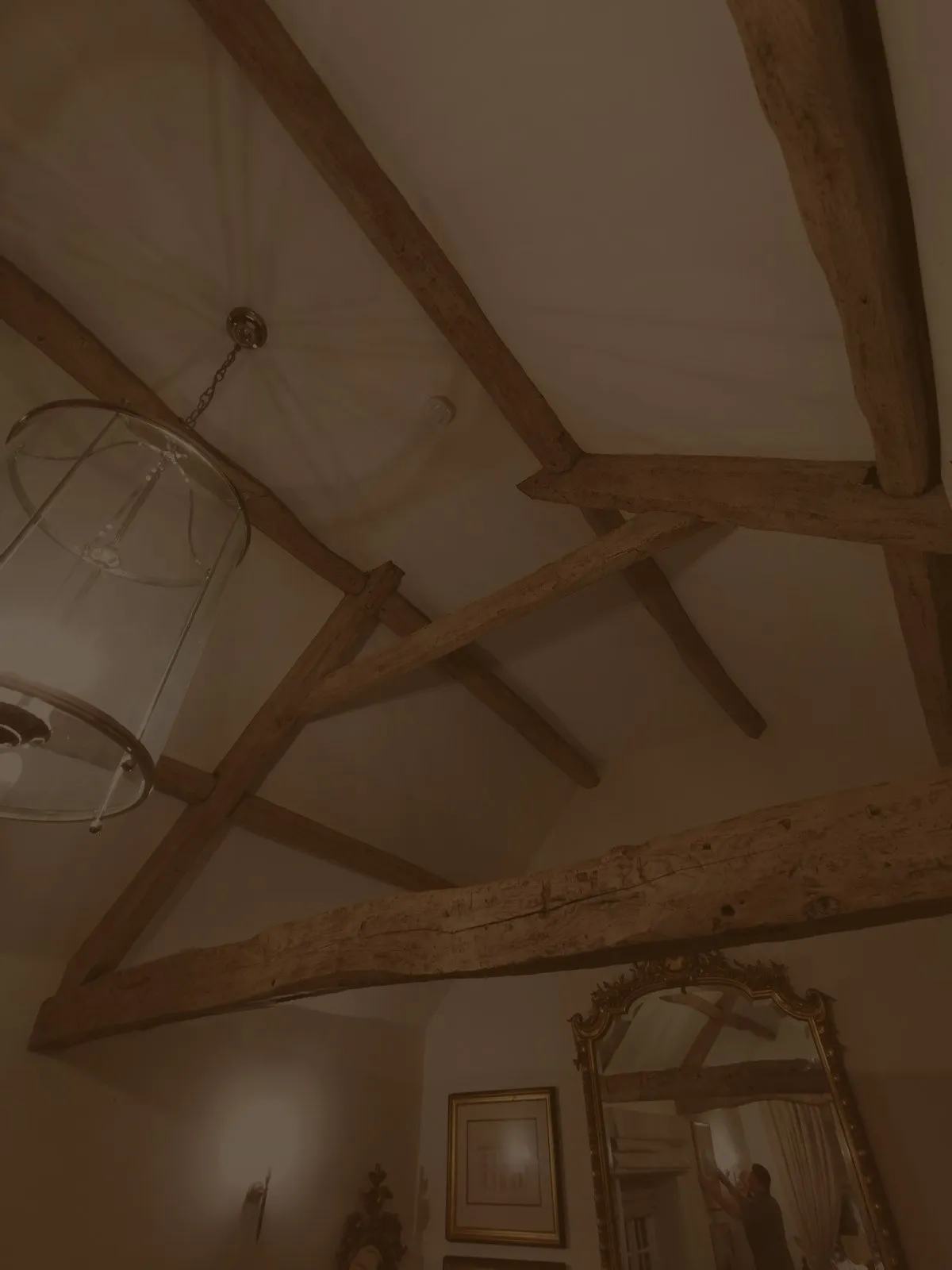
Period Property Specialists · Est. 1997
Dark beams, brought back to life. Without the mess.
Two generations of knowledge and skill, translated into your home.
Your home holds centuries of history. The beams deserve to be handled with care.
Back From Black is a second-generation restoration house, built on a process developed in 1997 and refined ever since.
A word to period property owners
Period homes are shaped over time. They settle, shift, and carry the marks of those who built and lived in them.
These are not imperfections. They are a record of how the building has lived.
We preserve what is already there rather than replace it. We uncover the character that has been hidden over time.
As featured on
Three times.
Invited back to George Clarke's Old House New Home
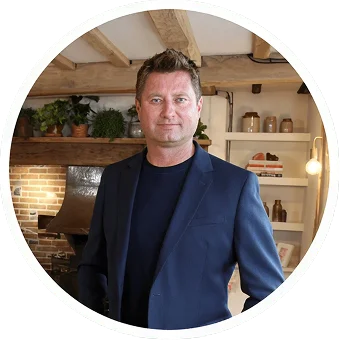
Each project was approached individually, with a finish chosen to sit naturally within the property and reflect the preferences of its custodian.
Do your beams deserve the same?

Warm Oak: Peak District

Weathered Oak: Buckinghamshire
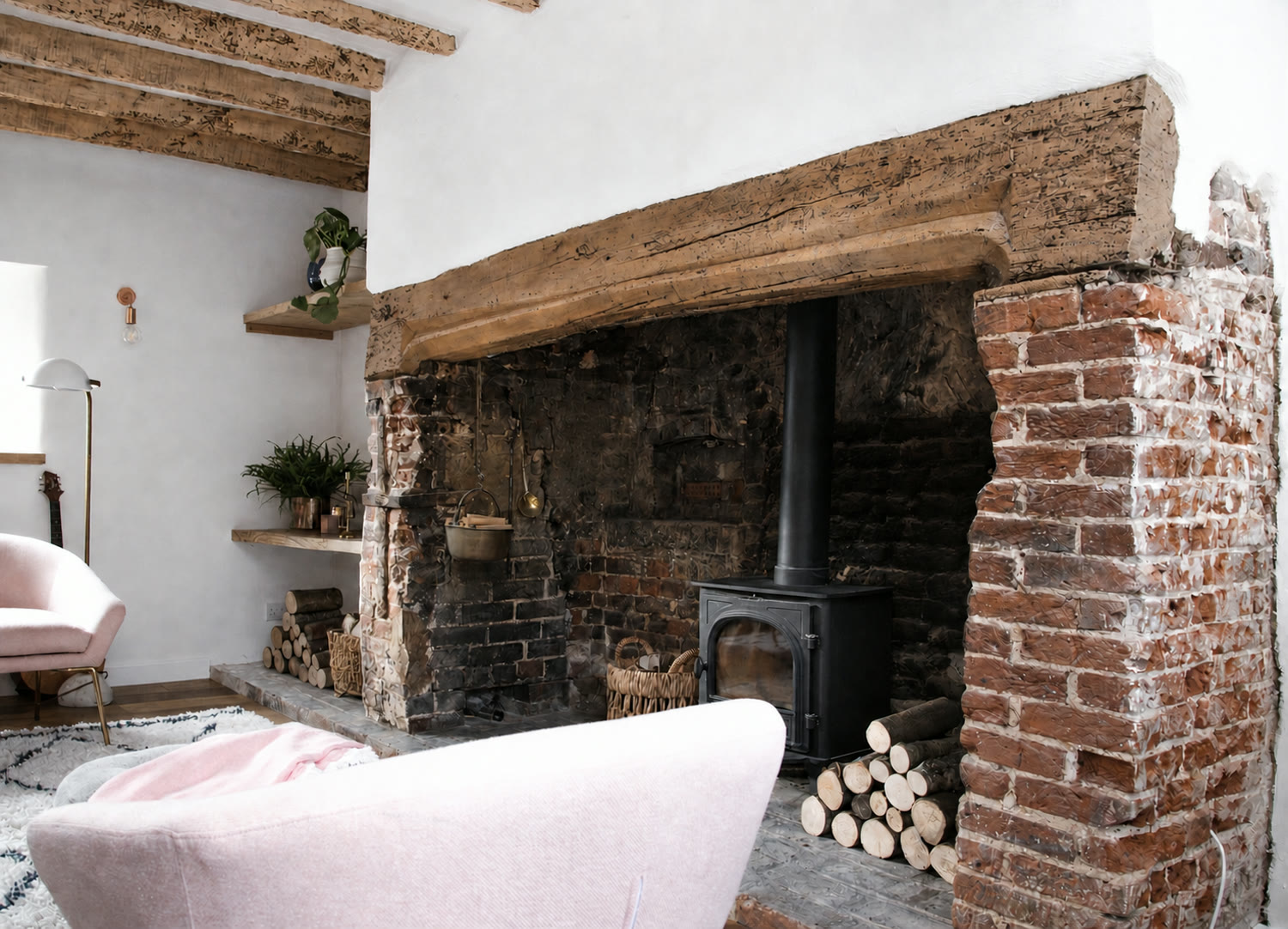
Aged Oak: Hove
Our Projects
A record of projects completed
Trusted across period cottages and historic properties throughout England.
 Warm Oak — Period Cottage, Sussex


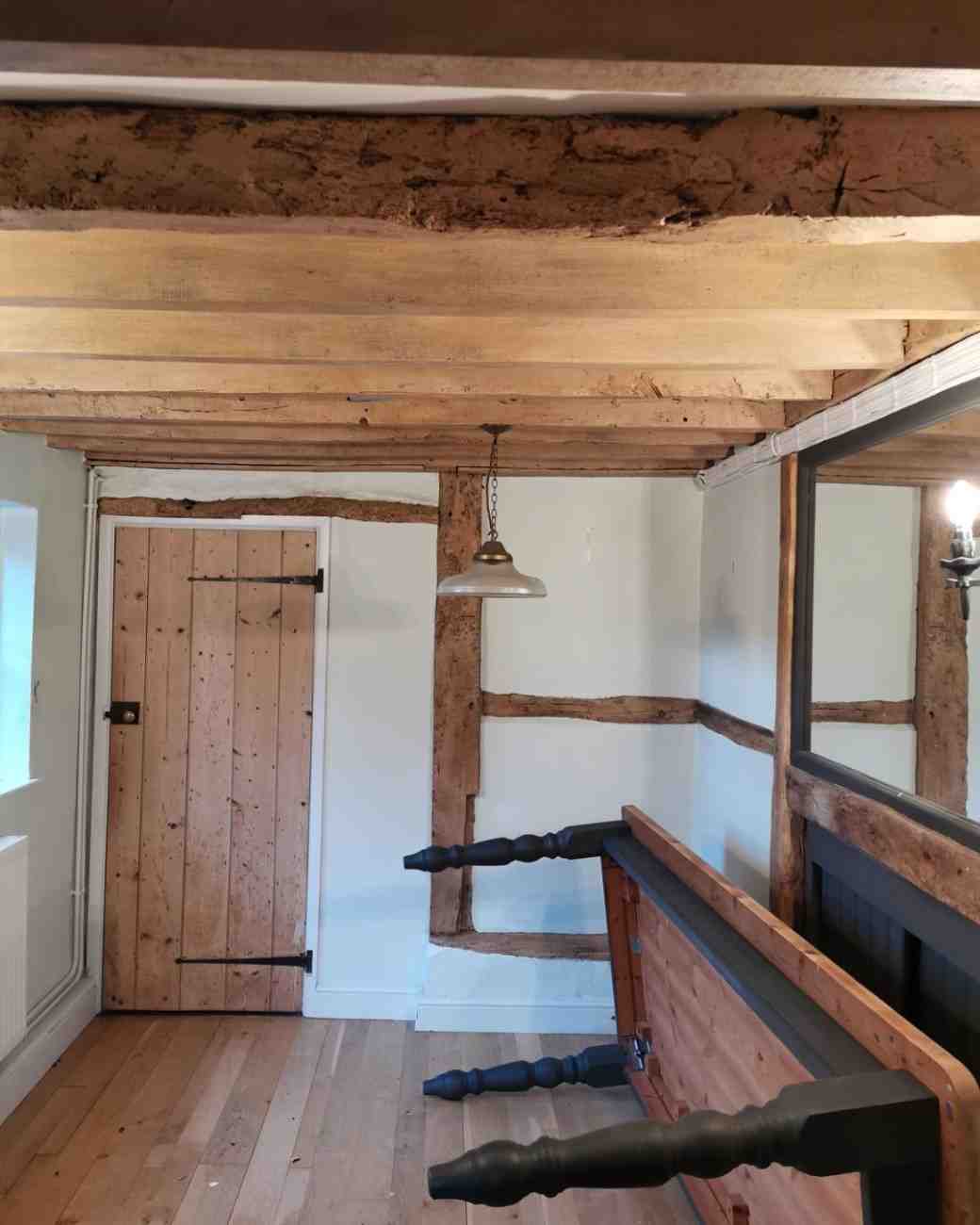
Developed over decades. Refined across generations.
The Back From Black Process
The process began with a decision not to strip away the past.
In 1997, working on period properties, Penny Sinclair was faced with beams that would ordinarily have been stripped or blasted. She chose not to.
Instead she worked the surface by hand — an approach that brought the timber back into balance without taking anything away.
That became the process. It has been refined through continuous work ever since — and it has never left the family.
A controlled application works with the surface of the timber, brightening tone and bringing forward the natural grain and markings already present.
It was never designed for speed or convenience.
Only for one outcome: to reveal the true character of period timber without removing a single part of its history.
The principle remains unchanged:
"Nothing is removed. Everything is revealed."
The founding principle · Est. 1997
Our Methods
Four principles.
Nothing is removed. Everything is revealed.
No loss of historic material
Every surface detail remains intact. Nothing of historic value is removed or compromised.
1. I
No Loss of Historic Material
Every surface detail remains intact. Nothing of historic value is removed or compromised.
2. II
No sanding, no blasting, no dust
Applied with brushes only. Nothing is thrown at the timber, so there is no residue to clear afterwards. Your home stays exactly as you left it.
3. III
Controlled application
No corrosive chemicals. All applications are water-based and virtually odourless, with no need to vacate.
4. IIII
Limited Projects
Few projects taken at any one time. Each property is worked personally, not scheduled around.
"This is a craft, not a service"
This process has not been standardised or distributed.
It has been developed privately, passed down, and refined through continuous work in period properties.
It is not replicated elsewhere.
"This is a craft, not a service"
This process has not been standardised or distributed.
It has been developed privately, passed down, and refined through continuous work in period properties.
It is not replicated elsewhere.
Why It Matters
Why Conventional Methods Fall Short
Most beam treatments were not developed with older properties in mind. They prioritise removal and uniformity over preservation, and the results reflect that.
What comes off cannot go back on.
Surface layers carry tool marks, hand shaping, and centuries of age. Once removed, those details cannot be reinstated. What looks like cleaning, is in fact erasure.
Indiscriminate approaches compound the problem
Older materials respond differently to modern treatments. Methods that fail to account for this are rarely appropriate for period properties.
Paint hides the grain, the tool marks and the age.
Black paint is commonly introduced to period timber, bringing a uniformity that sits at odds with the material itself. The natural grain, tonal variation, and individual markings become subdued, leaving the surface visually flattened. What remains is consistent, but much of what made the timber distinctive is no longer as apparent.
The mess is treated as the price of the job.
Dust, noise and weeks of upheaval are treated as inevitable. They are not.

The Craftsman
Second generation. The same craftsman on every job.
"I grew up around this process. It was developed in the early years of the business and shaped by the need for a more appropriate approach to period timber."
Nick has carried the method across different timber types, different properties, different counties, different countries, always guided by the same principle: respect the building first.
The hands-on work is carried out by Peter, the craftsman who joined the firm and was trained directly in the method. Nick oversees each commission personally.
Each project is approached with the same mindset: Respect the building. Respect the material. Apply the craft properly.
The Craftsman
Second generation. The same craftsman on every job.
"I grew up around this process. It was developed in the early years of the business and shaped by the need for a more appropriate approach to period timber."
Nick has carried the method across different timber types, different properties, different counties, different countries — always guided by the same principle: respect the building first.
The hands-on work is carried out by Peter, the craftsman who joined the firm and was trained directly in the method. Nick oversees each commission personally.
Each project is approached with the same mindset: respect the building. Respect the material. Apply the craft properly.
Recent Projects
Beautifully Finished Beams.
Trusted across period cottages and historic properties throughout England.


Signature Finishes
Three finishes. Carefully developed.
Each one selected to align with the existing tone and character of the property.


What the Work Reflects
Recognised by those who understand period property.
Common concerns from period property owners.
Everything you need to know before we begin.
Every property is different. These answers cover the most common questions we receive from period property owners.
No need to move out
The work is designed for occupied homes, with minimal disruption and no need to vacate.
No secondary works required
Original features remain fully intact. No replastering, redecorating, or preparatory work needed.
Suitable for historic properties
The finish is built up in three fine coats. No historic material is removed or compromised.
Non-hazardous & virtually odourless
All applications are water-based. No corrosive chemicals, solvents, or aerosols. Safe for children and pets.
Original features highlighted, not erased
Where black paint conceals grain, carpenter's marks, and witch marks — our process accentuates them.
Answers to your questions.
What can I expect during the process?
The work is designed for occupied homes. Minimal disruption, no need to vacate. No secondary works required, and original features remain fully intact. Suitable for historic properties.
Will this work on heavily painted beams?
Yes. The process works across multiple layers and varying conditions, without removing underlying material.
How long does it take?
Most projects are completed within 1-2 days. We give you a precise timeline with your quote and we hold to it.
Will it suit my property?
Each finish is matched to the tone, age, and structure of the building. Our approach is bespoke; we do not impose a standard result.
Does it add value?
Well-restored original features are widely recognised as a premium asset in heritage homes. Clients consistently report that the restoration contributes positively to independent valuations.
Do you work across England?
We cover all counties across England. Get in touch and we will confirm whether we can reach you. In most cases, we can.
Get In Touch
Start with a Conversation
Every property is different. We begin by understanding your home; its age, structure, and current condition. From there, we provide clear, tailored guidance on what can be achieved. We work to your timeline, not ours.
Your call is taken by Charlene. She spent her career in her family’s property business — lettings and development — so she understands period homes and knows the right questions to ask about your beams. She’ll make sure your enquiry is handled personally, then pass it to Nick.
Request an assessment
Period beam restoration specialists since 1997
Safe, confidential, and without obligation.